How Money is Created (Monetary & Quantitative Easing)
 Jeffrey P. Freeman
Nov 29, 2020
2 min read
Jeffrey P. Freeman
Nov 29, 2020
2 min read
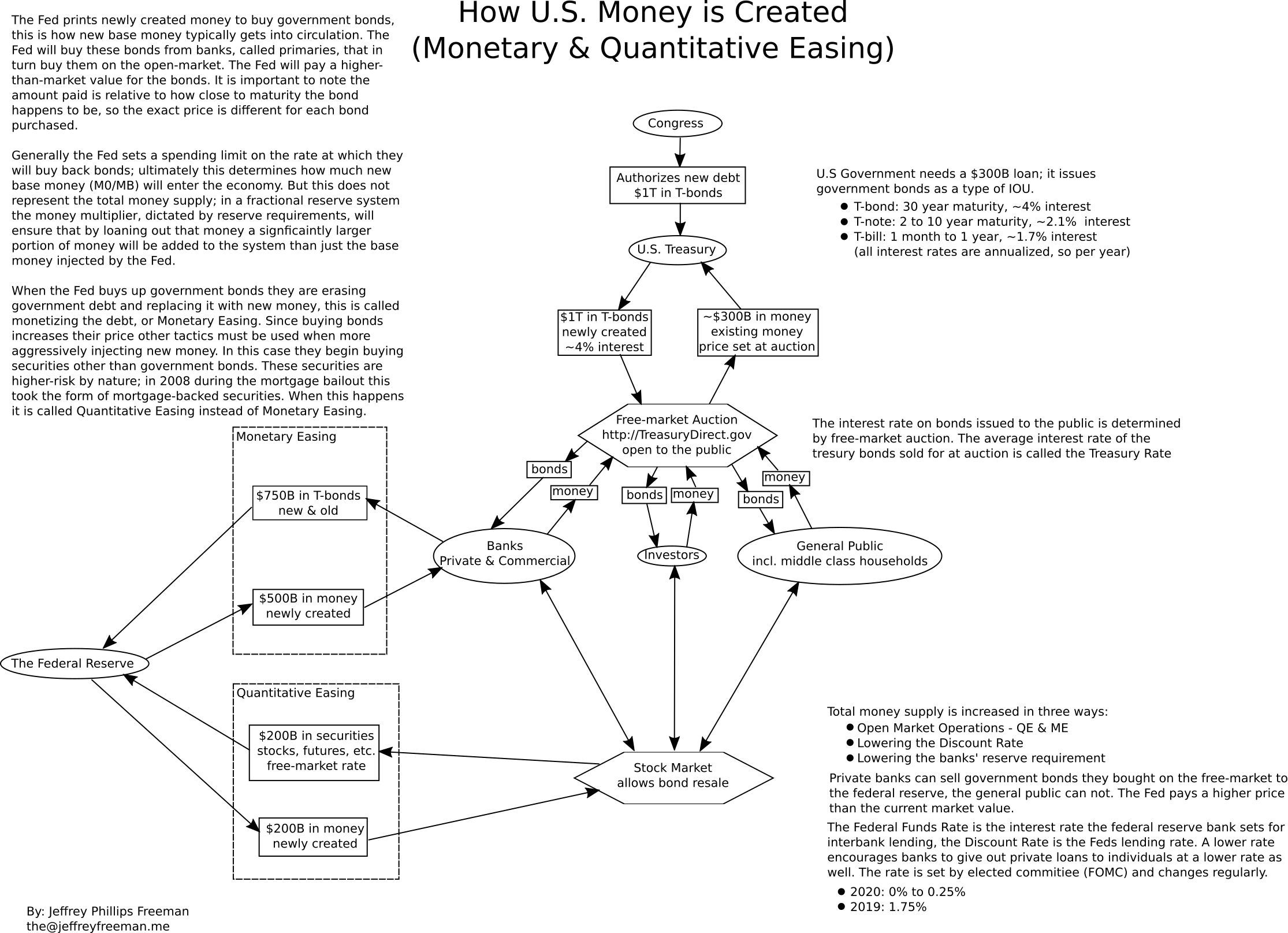
TL;DR New money enters circulation through a cycle: the government borrows from the public (creating debt), the Federal Reserve buys that debt (Quantitative Easing), and banks lend out deposits (Monetary Easing). The diagram below shows the full loop. An educational diagram I just finished creating showing how new money gets into circulation in the USA. Here I explain how the government borrows from the people, aquiring debt, as well as how new money is created and put into circulation.
New money enters circulation through a cycle: the government borrows from the public (creating debt), the Federal Reserve buys that debt (Quantitative Easing), and banks lend out deposits (Monetary Easing). The diagram below shows the full loop.
An educational diagram I just finished creating showing how new money gets into circulation in the USA. Here I explain how the government borrows from the people, aquiring debt, as well as how new money is created and put into circulation. I explain both Monetary Easing and Quantitative easing.
Monetary Easing: Banks lend more than they hold in reserves, effectively creating money through fractional-reserve lending.
Quantitative Easing: The central bank buys government debt (bonds) from the market, injecting newly created money directly into the financial system.
Click the image below for full size!
Total money in circulation including savings and checking deposits
Assets held by the Federal Reserve after COVID-era QE
As of March 2020, banks face no reserve requirement on deposits
Data scientist, open-source innovator, and three-time founder who writes about graphs, radios, and the occasional impossibility. Allegedly just another data scientist. Say hello →